
Cohabite Avec Ton Chat - CatChat Rosemère
Helping stray cats through community action.
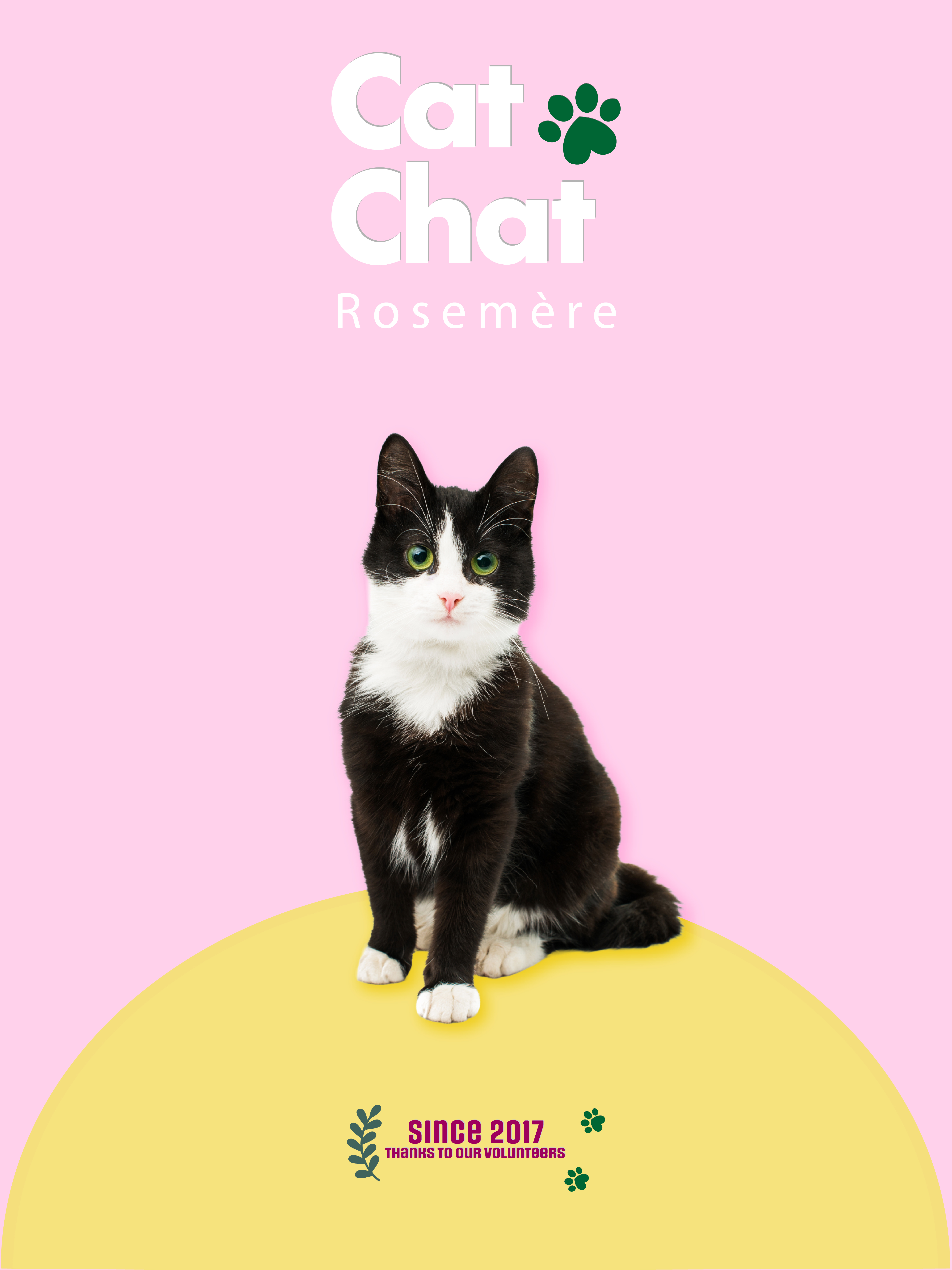
CatChat Rosemère is a group of dedicated citizens helping stray cats in Rosemère. Thanks to the involvement of volunteers and foster families, some cats and kittens are able to receive care, be sterilized, and, when possible, be given a second chance.
CatChat Rosemère’s work is built on collaboration between residents, volunteers, foster families, and partner veterinarians. Together, these efforts help improve the situation of stray cats in the community in a responsible and humane way.
CatChat Rosemère is active throughout the year. Field operations, however, generally take place from mid-spring to mid-fall, when conditions are more suitable for intervention.
It is important to note that CatChat Rosemère is not a shelter and does not have permanent facilities to house cats. The organization therefore does not take cats in directly.
When kittens or friendly cats are trapped during interventions, they may be placed with partners or foster families so they can be socialized and eventually adopted. Adoption announcements are shared as situations arise, particularly through the CatChat Rosemère Facebook page.
In other words, the organization does not keep a standing list of adoptable cats, but responds according to situations observed in the field.
Every action matters. Even a few hours can make a real difference in an animal’s life.
A responsible, structured approach adapted to the realities of the territory.
Activities and interventions take place only within the Town of Rosemère.
Residents, volunteers, foster families, and veterinary partners work together.
About
Our mission
CatChat Rosemère’s mission is to help responsibly control the stray cat population in Rosemère by promoting a humane, structured, and lasting approach.
The initiative is based mainly on sterilizing stray cats and returning them to their territory, a recognized method for stabilizing colonies and preventing uncontrolled reproduction.
When a resident reports stray cats in their neighborhood, the team helps assess the situation and determine the most appropriate response.
The organization’s role is first and foremost to guide and support residents through the process. Humane traps are loaned out, and information, documentation, and practical advice are provided so that citizens can trap cats safely and responsibly.
Read more
The trapping itself is therefore done by residents, using the borrowed equipment and following the recommended procedures.
Once the cats have been captured, volunteers coordinate the next steps with partner veterinarians. The cats are then transported to affiliated veterinary clinics to be examined and sterilized.
After the procedure, the cats are returned to their original territory with the help of the resident who took part in the process. This helps maintain the natural balance of the area while preventing further reproduction.
When kittens or friendly cats are trapped, the organization also tries to give them a second chance. With the help of volunteers and foster families, these cats can be socialized and eventually adopted into loving homes.
This entire process depends on a community effort built on collaboration between residents, volunteers, foster families, and veterinary professionals committed to improving the lives of stray cats.
Costs related to bait, veterinary care, medication, and other necessary interventions are covered by the non-profit organization through the Live With Your Cat – CatChat Rosemère stray cat management program, which is largely subsidized by the Town of Rosemère. This support covers most of the costs associated with interventions. The organization also benefits from community support, including donations of food, litter, and other supplies.
Each intervention helps reduce animal suffering while encouraging more harmonious coexistence between stray cats and the Rosemère community.
Resources
Stray cats
Stray cats are cats that live outdoors without a permanent home. Some were born outside and have had very little contact with humans, while others may be abandoned cats that gradually adapted to life outdoors.
These cats are sometimes seen in the same area, where they find food, shelter, or a safe place to rest. These groups are often called stray cat colonies.
Stray cats are generally more wary of people. They tend to keep their distance, avoid close contact, and may appear fearful when someone tries to approach them. This behavior is normal and reflects their outdoor way of life.
One important detail to look for is the tip of the left ear. When a stray cat has been trapped, sterilized, and returned to its territory through a stray cat management program, a small notch is usually made at the tip of the left ear.
Read more
This visible mark makes it easier to identify cats that have already been sterilized. It helps prevent the same cat from being trapped again and shows that it is already part of a stabilized colony.
This practice is widely used in stray cat management programs, especially as part of the Trap, Neuter and Return (TNR) approach.
In a municipality like Rosemère, where there are many wooded areas, a variety of wildlife, and several bird species, responsible stray cat management helps maintain a better balance between animals, local wildlife, and the community.
The goal is not to eliminate stray cats, but rather to stabilize colonies and reduce reproduction in order to promote more harmonious coexistence between animals and residents.
Our work
Trap, Neuter and Return (TNR)
In a town with abundant green space and wildlife like Rosemère, the TNR method helps maintain a balance between stray cats, local wildlife, and the community.
The management of stray cats is based on a recognized approach known as TNR – Trap, Neuter and Return.
This method involves safely trapping stray cats using humane traps, then bringing them to a partner veterinarian to be examined and sterilized.
After the procedure, adult cats are returned to their original territory.
Cats that have been living outdoors for a long time are generally well adapted to their environment. Relocating them can cause significant stress and reduce their chances of survival.
In addition, when a group of cats is removed from an area, other cats can quickly move into the same space. This is known as the vacuum effect.
Video of a trapping intervention in Rosemère
Video of a trapping operation carried out in Rosemère.
The vacuum effect occurs when resources such as food, shelter, or safe resting places remain available in a territory. If the cats already present are removed, other cats from nearby areas may move in and quickly form a new colony.
By sterilizing cats and leaving them in their territory, existing colonies become more stable. Sterilized cats no longer reproduce and continue occupying their space, which helps limit the arrival of new unsterilized cats.
When a stray cat is trapped, sterilized, and returned to its territory, a small notch is usually made at the tip of the ear. This visible mark indicates that the cat has already been sterilized and belongs to a stabilized colony.
The TNR method is now recognized by many animal welfare organizations and municipalities as one of the most effective and humane ways to manage the presence of stray cats.
In a municipality like Rosemère, where there are many wooded areas, abundant vegetation, and diverse wildlife including several bird species, it is especially important to maintain a balance between the various animal species that share the territory.
Read more
Responsible management of stray cat colonies helps reduce uncontrolled reproduction, limit impacts on local wildlife, and promote more harmonious coexistence between cats, wildlife, and residents.
The goal is not to eliminate stray cats, but to stabilize their presence responsibly in order to preserve the natural balance and the well-being of the community as a whole.
Get involved
Volunteers
Volunteers play an essential role in the organization’s work and in carrying out its mission. There are many ways to get involved, depending on each person’s interests, skills, and availability.
Some people choose to help in the field. These volunteers contribute to operations related to stray cat interventions, including helping residents through certain steps, transporting cats to partner veterinary clinics, or assisting during specific interventions.
Read more
Other volunteers are more involved in the organization and day-to-day functioning of the group. Some members sit on the board of directors and help with coordination, planning, and decision-making.
There are also many ways for community members to help on an occasional basis. Residents may contribute by sharing information, reposting publications, helping create content, or supporting special projects when needed.
Every volunteer contribution, whether ongoing or occasional, is valuable to the organization and helps strengthen collective efforts to improve the situation of stray cats in the community.
Above all, involvement is rooted in collaboration, solidarity, and respect for animal welfare. Even a small contribution can make a real difference.
Anyone who wishes to get involved, or simply learn more, is always welcome to contact us.
Get involved
Foster families
Foster families play an essential role in the organization’s mission and in the care provided to cats taken in from the community.
When a cat or a litter of kittens is taken in, they often need a calm and safe environment where they can rest, regain strength, and gradually get used to human presence. This transition period is often crucial to their well-being and their chances of adoption.
Temporarily welcoming a cat into a home gives it a safe place to recover, receive the care it needs, and slowly adapt to life indoors.
Foster families may care for kittens that are still too young for adoption, friendly cats that need further socialization, or cats recovering from a veterinary procedure.
Depending on the situation, the foster period may last anywhere from a few weeks to a few months. Every foster placement helps prepare a cat for a permanent home.
Read more
You do not need extensive experience to become a foster family. What matters most is having some space, patience, and the desire to help an animal regain trust.
The organization supports foster families throughout the process. Guidance, advice, and follow-up are provided so the experience is positive for both the families and the cats.
Necessary veterinary care is covered by the organization through its partner veterinary clinics, and some supplies may be provided depending on donations received from the community.
Being a foster family means offering temporary shelter, but above all giving a vulnerable animal the chance to rebuild trust and begin a new life.
How long does a foster placement usually last?
The length varies depending on the cat’s age, health, and level of socialization. Some cats may be ready for adoption after a few weeks, while others may need more time to adjust to life in a home.
Do I have to pay for veterinary care?
No. Veterinary care related to fostering is covered by the organization through its veterinary partners.
What happens if the cat does not adapt well to my home?
Every situation is different. If a problem comes up, the organization remains available to offer guidance and help find solutions. The goal is always to protect the cat’s well-being and support the foster family in its role.
Can I foster a cat if I already have pets at home?
Yes, in many cases that is possible. Some precautions may be needed to ensure a gradual and safe introduction. Foster families receive recommendations to help make that process easier.
What happens when a cat is ready for adoption?
Once a cat is ready, the organization begins the adoption process. Information shared by the foster family about the cat’s behaviour, habits, personality, and photos is extremely helpful in finding the most suitable home.
Can I adopt the cat I am fostering?
Yes. Foster families may express their interest if they would like to adopt the cat in their care. In that case, the regular adoption process applies.
Foster family questionnaire
Would you like to become a foster family or learn more about this role? Fill out the form below and a member of our team will contact you.
Resources
Report a stray cat
If you notice stray cats in your neighbourhood, you can contact CatChat Rosemère at 450 435-7336 and leave a detailed voicemail so that a volunteer can assess the situation.
Reports from residents play a vital role in the responsible management of stray cats in Rosemère. They help CatChat Rosemère direct interventions and guide residents through the appropriate steps.
When reporting a situation to CatChat Rosemère, certain details can be especially helpful in understanding the context and evaluating what kind of intervention may be needed.
The following information can help document the situation:
• approximate number of cats seen
• where the cats are regularly spotted
• their behaviour (fearful, friendly, frequent or occasional presence)
• whether kittens may be present
• how long the cats have been seen in the area
This information helps CatChat Rosemère determine whether intervention is needed and support residents in setting up an appropriate response.
An important detail to observe is the condition of the cat’s ears. When a cat has a small notch at the tip of the ear, this generally means it has already been trapped, sterilized, and returned to its territory through a stray cat management program.
This mark, often called an ear tip, makes it easier to identify cats that have already been handled through the CatChat Rosemère stray cat management program.
Even if a cat has this mark, it may still be useful to report it to CatChat Rosemère, particularly to monitor colonies over time and make sure the situation remains stable.
Reports from residents therefore help maintain responsible monitoring of stray cat colonies and support more harmonious coexistence between cats, local wildlife, and the Rosemère community.
Contact
Contact
For any questions, or to report a situation involving stray cats, you can contact CatChat Rosemère through our voicemail at 450 435-7336. Leave us a detailed message and a volunteer will get back to you.
Residents can also write to us to let us know about stray cats in their neighbourhood, ask questions about the stray cat management program, or learn more about CatChat Rosemère’s work.
The information shared by residents often helps us better understand what is happening on the ground and guide interventions when needed.
The CatChat Rosemère team is made up mainly of volunteers. Messages are answered as quickly as possible depending on everyone’s availability.
CatChat Rosemère’s activities and interventions take place only within the territory of the Town of Rosemère.
Thank you for your support and for your interest in the well-being of stray cats in our community.